

Knob and Tube Wiring Removal in Massachusetts
Old knob and tube wiring blocking your insulation upgrade, your home insurance, or your home sale? Get licensed knob and tube removal and code-compliant knob and tube wiring replacement.
Is Knob and Tube Wiring Putting Your Home at Risk?
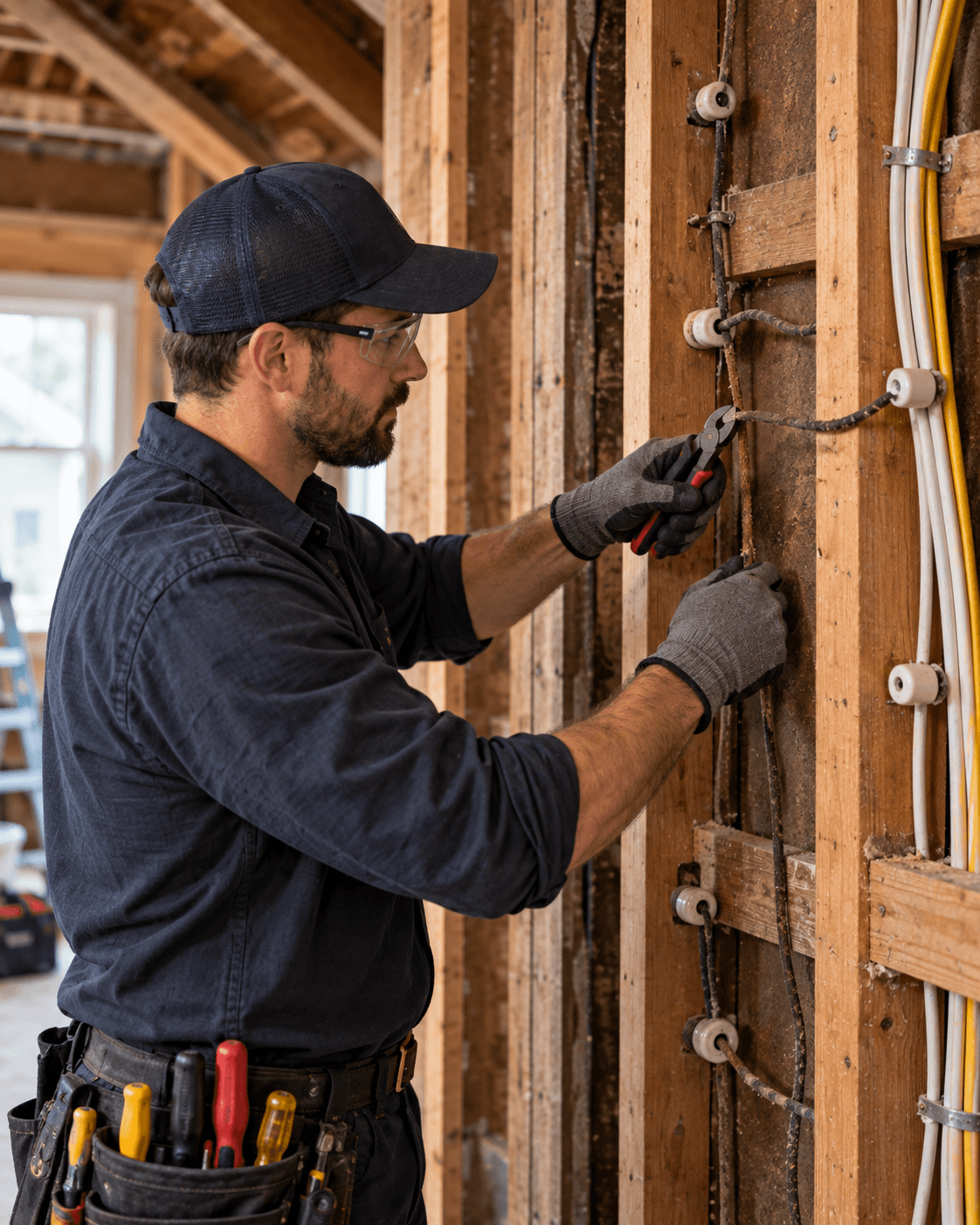
Knob and tube wiring - the pre-1950s method with ceramic knobs supporting bare copper conductors - was engineered before modern electrical loads existed. It has no ground wire, its cloth or rubber insulation is often brittle after 70+ years, and Massachusetts code prohibits covering it with insulation. If your home has active knob and tube, three real risks are on the table:
- Fire & Safety Risks — deteriorated insulation and overloaded circuits are a documented cause of home fires
- Insulation Restrictions — Mass code forbids blowing insulation over live knob and tube wiring, blocking energy efficiency upgrades
- Insurance & Home Sale Concerns — many insurers refuse to write policies on homes with active knob and tube, and buyers often demand removal at closing
What Does Knob and Tube Wiring Look Like?
Knob and tube wiring shows up as two separate cloth-covered wires held apart by white ceramic knobs (spools) and passed through wooden framing inside ceramic tubes. You typically see it in an unfinished basement or attic - two black-cloth or brown-cloth wires running along joists, stapled to ceramic insulators.
Modern Romex wiring, by contrast, is a single flat plastic-sheathed cable holding all conductors together. If you can see the difference on your basement ceiling, you know whether you have a knob and tube.
Knob and Tube Inspection, Removal & Rewiring
Inspection
Our licensed knob and tube electrician identifies where active knob and tube wiring remains and assesses its condition. Some homes have K&T only in certain rooms; some have it throughout. The scope shapes the quote.
Removal
Safely remove accessible active K&T wiring. Inactive knob and tube that's already been abandoned inside walls can often stay in place; only live circuits need knob and tube removal.
Wiring Replacement
Install modern, code-compliant wiring such as Romex where appropriate. Every knob and tube wiring replacement circuit meets current Massachusetts Electrical Code.
Inspection & Certification
Coordinate required municipal inspection and document the completed work for your insurance company and mortgage lender.
Mass Save Knob and Tube Removal for Insulation Upgrades
When knob and tube wiring is blocking an eligible Mass Save® insulation upgrade, the program covers a portion of the knob and tube removal cost - sometimes up to 100% - so the insulation work can proceed. That's a real Mass Save loophole most homeowners don't know about. Ecosave books the assessment, gets the K&T removal approved, and then completes both the electrical work and the insulation as one coordinated project.
From Old Wiring to a Safer, More Modern Home
1. Assess
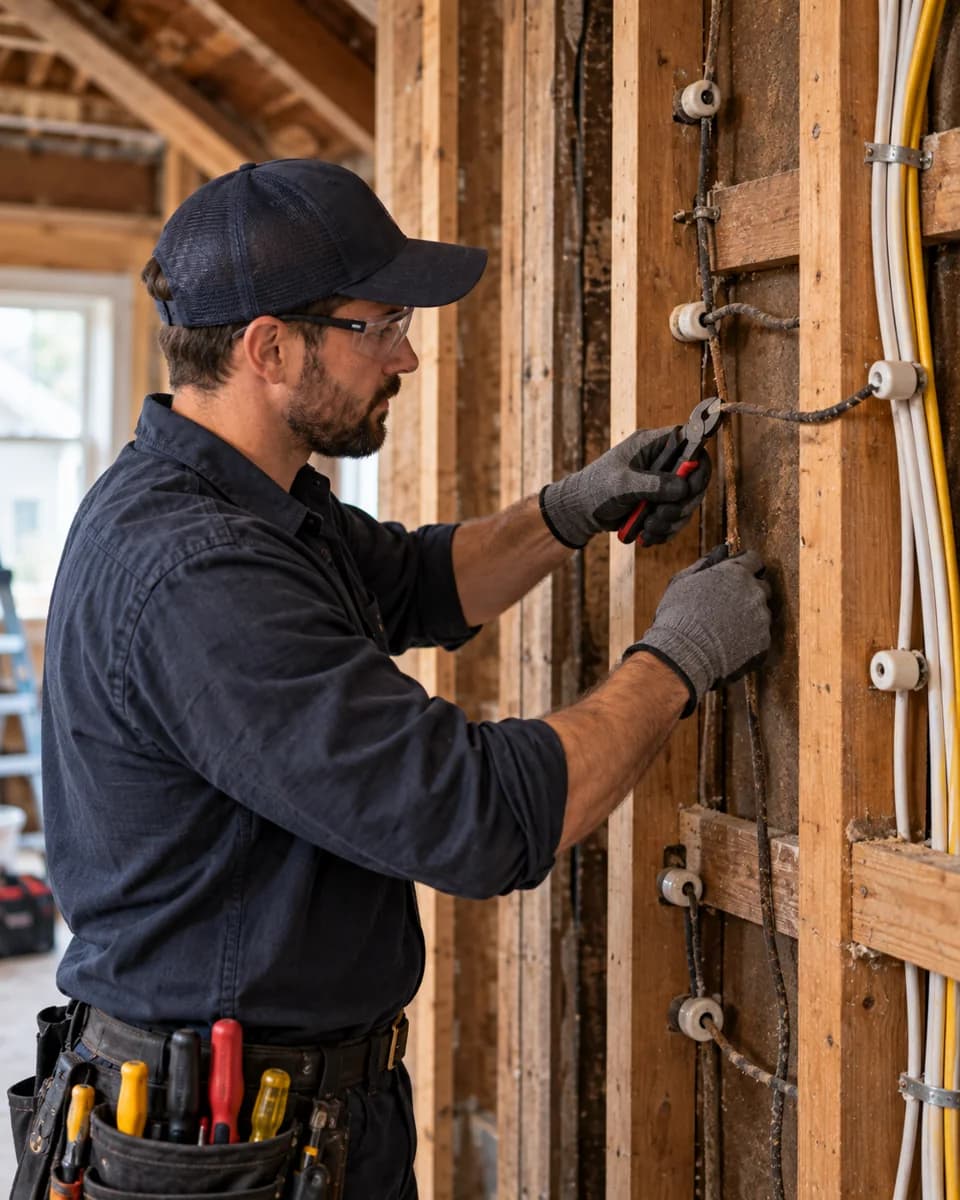
Inspect the home's existing knob and tube wiring.
2. Plan
Determine the scope of removal and replacement.
3. Rewire
Remove active K&T and install modern wiring where required, minimizing wall disruption where possible.
4. Inspect & Certify
Coordinate inspection and prepare the home for the next upgrade.
5. Insulate
Where applicable, move forward with eligible insulation improvements the K&T was blocking.
Why Choose EcoSave for Knob and Tube Removal?
| Reason | What it means |
|---|---|
| Massachusetts-licensed knob and tube electrician | Every knob and tube removal job completed by a licensed electrician, code-compliant |
| Mass Save® paperwork handled | We file the K&T-for-insulation approval directly with your utility |
| Insulation and electrical in one project | Skip juggling two contractors — we finish the wiring and blow the insulation as one job |
| Insurance and mortgage documentation | We provide the paperwork insurers and lenders ask for |
| Multilingual crews | English, Português, Español, 中文 |
Frequently Asked Questions About Knob and Tube Wiring
It can be. Knob and tube was designed for 1920s-era electrical loads (a few lightbulbs and maybe a radio), not today's HVAC, kitchen, and electronic loads. When overloaded or when its cloth insulation has deteriorated, K&T is a documented fire risk.
Not legally, but practically often yes. Many buyers require it as a condition of sale, and many insurers refuse to write policies on homes with active knob and tube wiring. Removing it before listing usually smooths the closing significantly.
Not until the knob and tube is either removed or de-energized. Massachusetts electrical code prohibits covering active K&T with insulation because the wiring is designed to dissipate heat into open air.
Small partial-house jobs run $3,000–$6,000. Whole-house knob and tube wiring replacement typically runs $8,000–$18,000 depending on home size, wall access, and finishes. Mass Save may cover a portion when the removal enables eligible insulation work.
Not necessarily. An abandoned knob and tube inside walls is generally acceptable to leave in place as long as it's disconnected at both ends and de-energized. Active K&T is what code and insurers care about.
Depends on scope. A single-room removal takes 1–2 days. Whole-house knob and tube wiring replacement typically takes 3–7 days. Ecosave sequences the work to minimize how many rooms are opened at once.
We minimize wall damage using fish-tape techniques, existing access holes, and top-down or bottom-up approaches. Some patchwork is unavoidable, and we coordinate with a drywall repair partner when needed.
Your Old Wiring Could Be Holding Back Your Home
Find out if knob and tube removal is needed before your next insulation or electrical upgrade.