

EcoSave insulation & air sealing for Massachusetts homes
Insulation Installation in Massachusetts — Mass Save Eligible
EcoSave installs attic, wall, blown-in and crawlspace insulation plus air sealing across Massachusetts — 75–100% covered for qualifying homes through Mass Save, starting with a no-cost home energy assessment. Your assessment identifies the areas to treat and the share of the approved work you would pay.
- Mass Save® Participating Contractor
- Licensed & Insured
- BBB Accredited
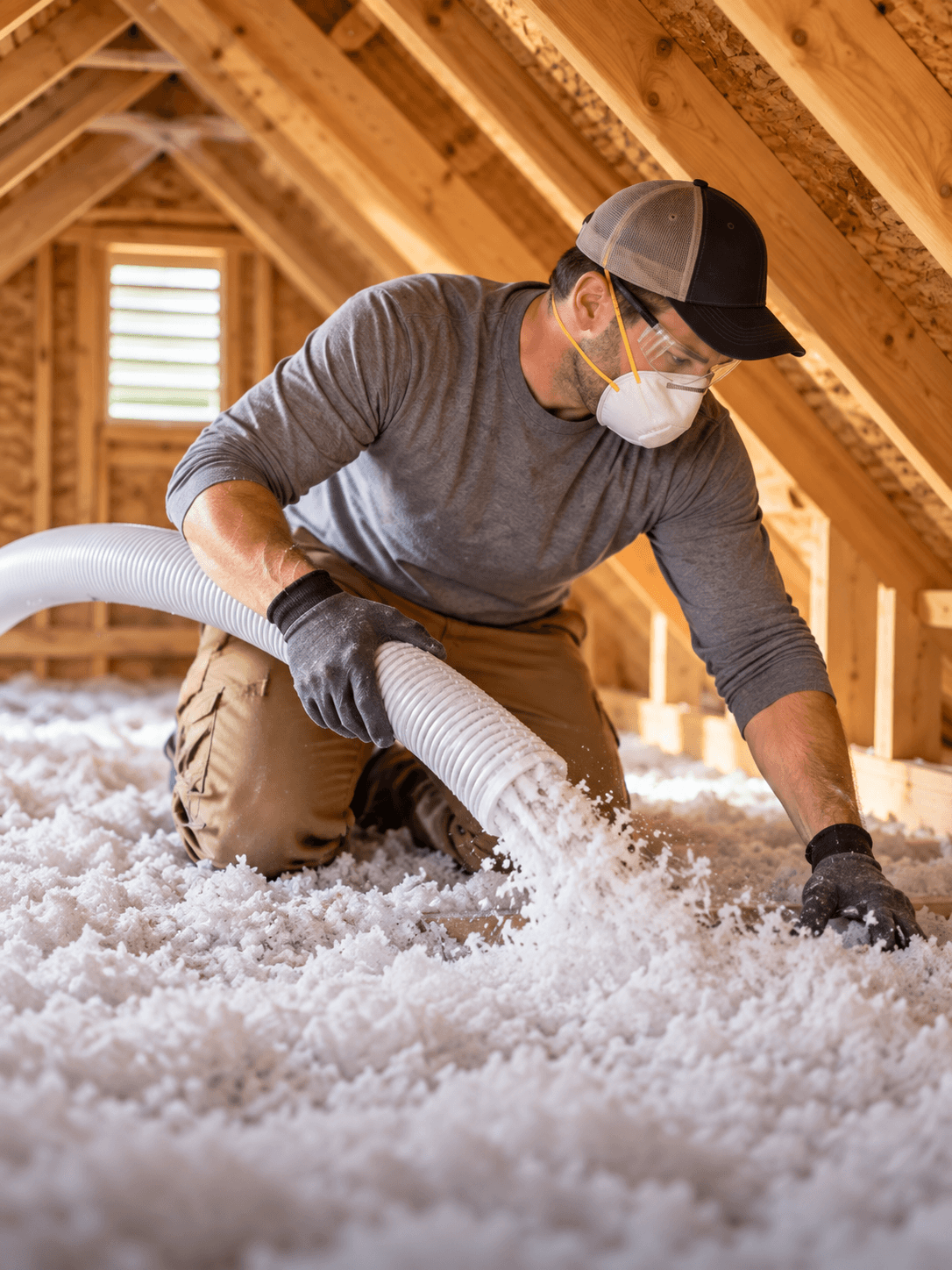
Make Your Home More Comfortable & Energy Efficient
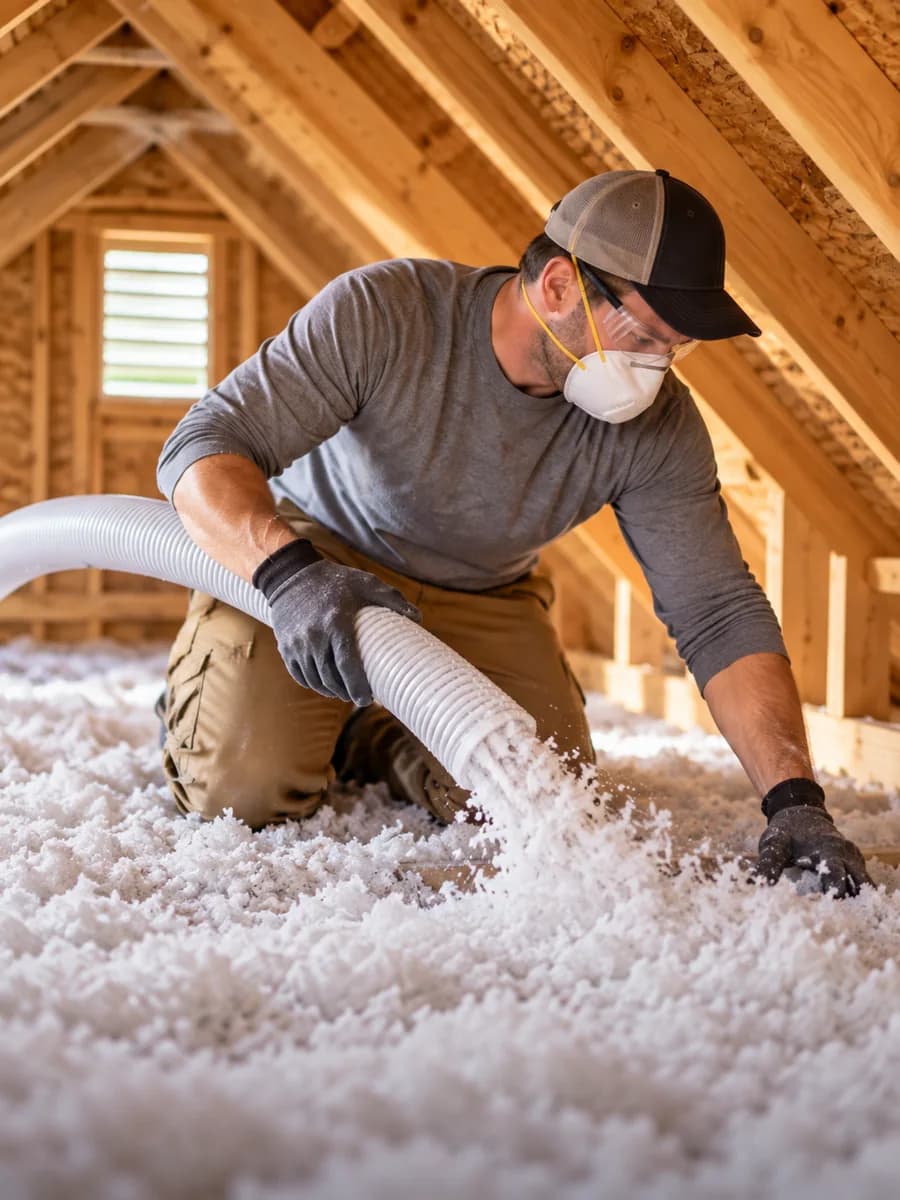
Good house insulation stops the winter heat you paid for from escaping through the attic, and it keeps summer air conditioning inside instead of leaking out through empty wall cavities.
Where heat escapes
Insulation Types We Install Across Massachusetts
Every Massachusetts home leaks energy in a specific way.
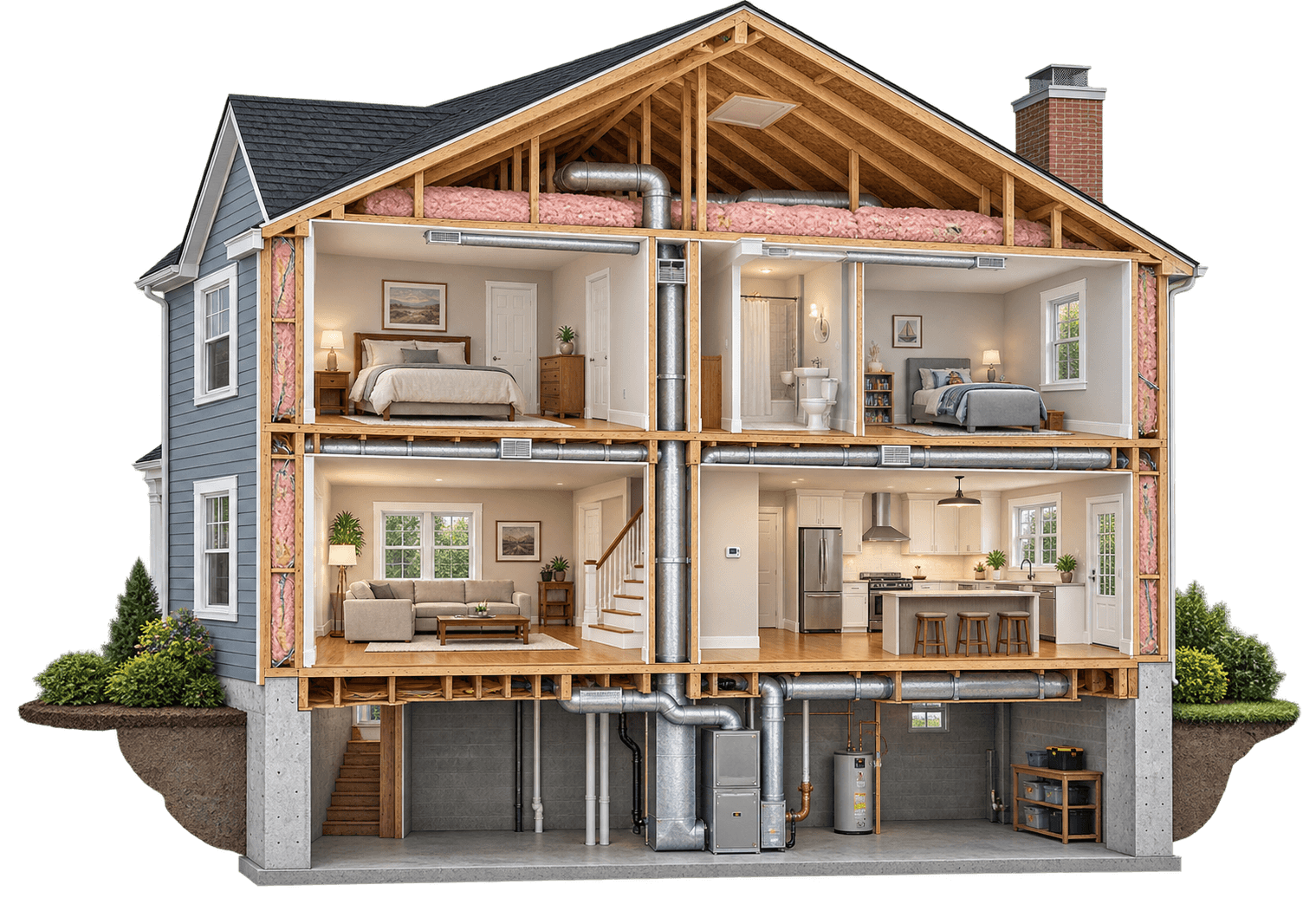
An illustration of a typical Massachusetts home, not a real property. Every house is different; the assessment shows where yours needs attention.
Insulation
A layer that slows heat moving out through the attic, walls and lower level.
- Attic InsulationBlown-in cellulose or fiberglass across the attic floor.
- Wall InsulationDense-pack cellulose wall insulation blown into exterior walls through small access holes fills the empty cavities in older MA homes.
- Basement & Crawlspace InsulationEvaluated during the assessment; eligibility depends on program rules and site conditions.
Air sealing
Closes the gaps that let warm air out and cold air in. Eligible points are identified during the assessment.
- Attic hatch and bypassesAttic hatches, pull-down stairs, recessed lights, and chimney and flue gaps.
- Rim Joist Insulation & SealingThe rim joist - where your foundation meets the floor framing - leaks air constantly in older homes.
- Wiring and plumbingGaps around pipes, wires and ducts, and at outlets and switch plates.
- Vents and openingsAround dryer vents, exhaust fans and other openings in the shell.
2026 Mass Save incentives
Mass Save Insulation Rebates - See What Your Home Qualifies For
As a Mass Save insulation contractor, EcoSave handles every step of the paperwork.
What applies depends on your home, your household and what the assessment finds. We go through it with you after the assessment.
- No-Cost Home Energy Assessment - a certified specialist identifies insulation and air-sealing opportunities in your home.
- Find Eligible Improvements - we determine which measures qualify under current Mass Save insulation rebates and confirm the exact amount with your utility.
- Complete the Upgrade - EcoSave handles the insulation work, submits the paperwork, and coordinates any required inspection.
For qualifying 1–4 unit homes. Eligibility for some incentives depends on Home Energy Assessment findings. Program requirements vary and offers may change. Incentives and eligibility are set by the Mass Save Sponsors, not EcoSave.
75–100%off approved insulation and air-sealing improvements for qualifying homes.
Income-eligible households
No-cost insulation and air-sealing upgrades may apply.
Designated equity communities
100% off qualifying weatherization upgrades may apply.
HEAT Loan 0% financing up to $25,000 for qualifying upgrades, with terms up to 7 years depending on the Sponsor and lender.
For qualifying 1–4 unit homes. Eligibility for some incentives depends on Home Energy Assessment findings. Program requirements vary and offers may change. Incentives and eligibility are set by the Mass Save Sponsors, not EcoSave.
Start with what you notice
Is Your Home Losing Energy Through Its Insulation?
If your Massachusetts home was built before 1980 and hasn't been re-insulated, the answer is almost certainly yes. Every Massachusetts home built before modern code has under-insulated attics, empty wall cavities, or unsealed rim joists.
Comfort problems usually have a source. These are common signs and where they may point. They are not a diagnosis; the assessment confirms what is actually going on.
Rooms that feel colder than the thermostat setting
- May point to
- The attic floor and roofline
- What we check
- Insulation levels and air leaks between the rooms and the attic
Ice dams forming on the roof edge in winter
- May point to
- Heat escaping into the attic
- What we check
- Attic insulation and air leaks into the attic
Uneven temperatures between floors of the house
- May point to
- Heat loss across the whole shell
- What we check
- How the attic, walls and basement work together
Drafts near baseboards, outlets, or the basement
- May point to
- The rim joist and basement
- What we check
- Gaps along the rim joist and the basement edges
- May point to
- Exterior walls and penetrations
- What we check
- Wall insulation and gaps around wiring, plumbing and the attic hatch
A heating bill that keeps climbing faster than the thermostat setting
- May point to
- Heat loss across the whole shell
- What we check
- How the attic, walls and basement work together
An HVAC system that runs almost non-stop and still can't keep up
- May point to
- Heat loss across the whole shell
- What we check
- How the attic, walls and basement work together
The Home Energy Assessment
What happens before any work starts.
Insulation and air sealing start with a no-cost Home Energy Assessment. It is how the work is scoped, and how eligibility for Mass Save incentives is confirmed.
Your comfort issues
We start with what you notice: cold rooms, drafts, ice dams or high bills.
A walk through the home
A visual inspection of the attic, walls, basement and the gaps between them.
Air-leakage testing
Blower-door testing, where it is part of the assessment, measures how much air the house leaks overall.
Safety blockers
Conditions such as knob-and-tube wiring, asbestos or moisture. If one is found, we explain the next step before insulation work proceeds.
About knob-and-tube removalRecommendations
What the assessment found, and which measures may be eligible for Mass Save incentives.
How it works
From Home Energy Assessment to a More Efficient Home
Assess
We confirm your home and program fit, then look at the attic, walls and basement.
Recommend
You get a clear insulation and air-sealing plan, with program eligibility noted where it applies.
Insulate & Air Seal
Crews complete the eligible work and protect your home while they work.
Enjoy Better Comfort
We walk you through the finished work and what comes next.
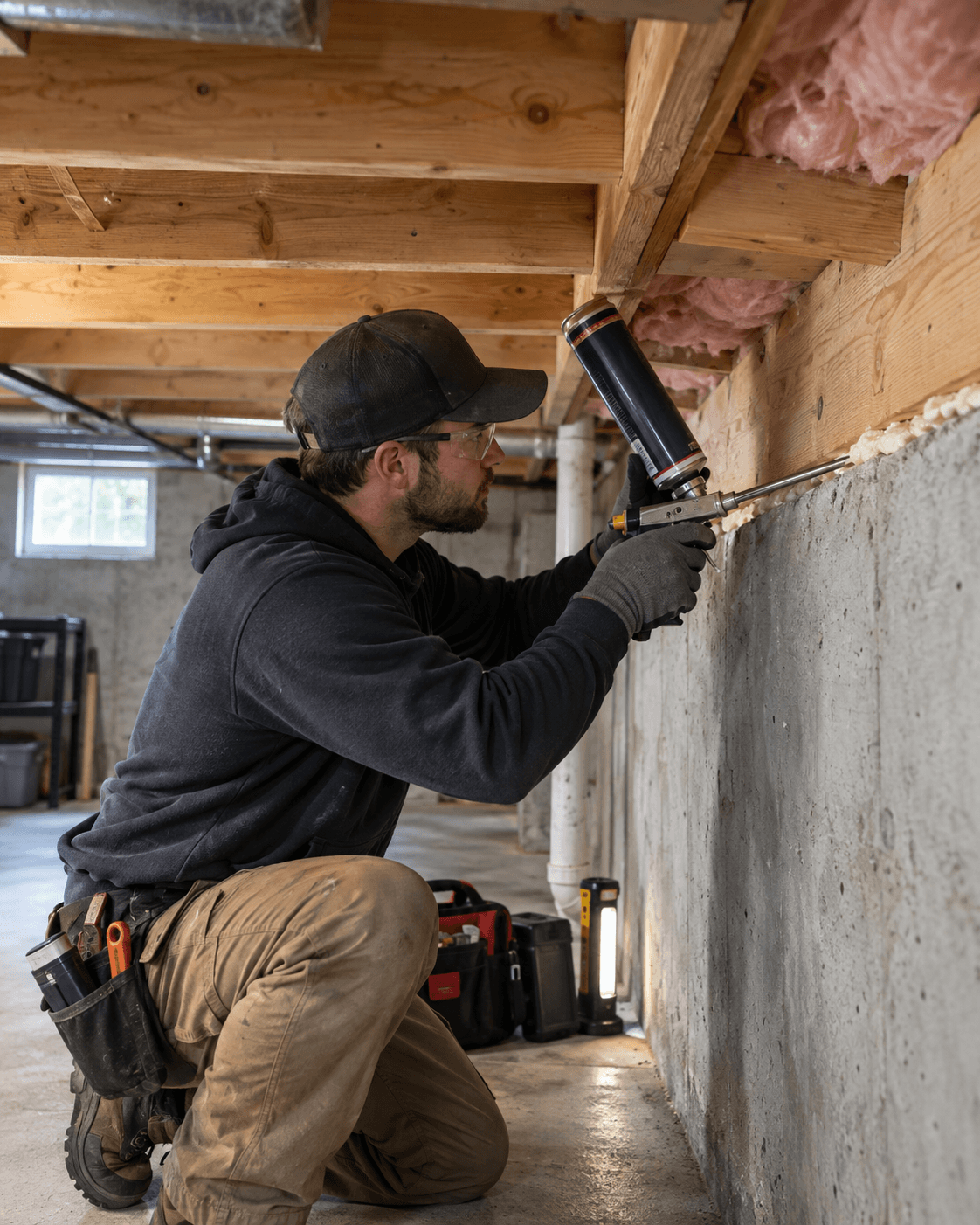
Why Choose EcoSave as Your Massachusetts Insulation Contractor?
Mass Save® Home Performance Contractor
Authorized to run the assessment and file Mass Save insulation rebates directly with your utility
Multilingual crews
English, Português, Español, 中文 across the whole insulation project
5,000+ Massachusetts homes served
Real experience with old Colonials, triple-deckers, Cape ranches, and Vineyard homes
One team, one paperwork trail
We coordinate the assessment, install, and rebate — you don't chase three vendors
Insulation assessments in your town
We serve homes in Lowell, Cambridge, Beverly, Andover and Quincy. When you book, tell us which rooms feel drafty and whether the crew can reach the attic or basement. Rebate eligibility depends on the property, utility and approved work. Check the full service area.
Frequently Asked Questions About Insulation Massachusetts
For some homes. Mass Save offers no-cost insulation and air-sealing upgrades to income-eligible households, and 100% off qualifying weatherization in designated equity communities. Other qualifying homes can get 75–100% off approved improvements. The assessment confirms what applies to yours. Ask for the covered scope in writing before authorizing the work.
It is the share of the cost of approved insulation and air-sealing improvements that Mass Save may cover for a qualifying home. Which improvements are approved, and the percentage that applies, depends on your home, your eligibility and what the Home Energy Assessment finds.
We talk through the comfort issues you notice, look at the attic, walls and basement, and check for safety blockers. Blower-door testing may be part of it. Afterwards you get recommendations, with program eligibility noted where it applies. Point out rooms that feel drafty and any places where you have noticed moisture.
Safety blockers have to be addressed before insulation work proceeds. If the assessment finds one, such as knob-and-tube wiring, asbestos or moisture, EcoSave explains the next step and can coordinate it. Do not disturb suspected hazardous materials yourself; ask which qualified trade needs to assess them.
Mass Save's insulation and air-sealing offers apply to qualifying homes with one to four units, and Mass Save also offers no-cost Home Energy Assessments for landlords of 1–4 unit properties. We can help you check what applies to your building.
Yes - with your landlord's participation. Renters can request the no-cost Mass Save assessment; the property owner needs to authorize the insulation work itself. If your apartment shares heating or an attic with other units, mention that when you book so the program can identify the right assessment for the building.
Stop Losing Heat Through Poor Insulation
Start with a no-cost Home Energy Assessment. We look at the attic, walls and basement and explain which Mass Save incentives may apply to your home.