EcoSave boilers & furnaces for Massachusetts homes
Boilers & Furnaces in Massachusetts | Installation & Service
Whether your heat comes from a boiler or a furnace, EcoSave looks at the system you have, how it heats your home and what makes sense next — a repair, a replacement or another heating path. It starts with a no-cost assessment.
A well-sized furnace or boiler is still the right answer for a lot of Massachusetts homes - especially older houses with existing hot-water baseboard, radiant floors, or a duct system that isn't ready for a full heat pump conversion. Ecosave handles boiler installation and furnace installation across MA, plus honest furnace service and repair on the system you already own.
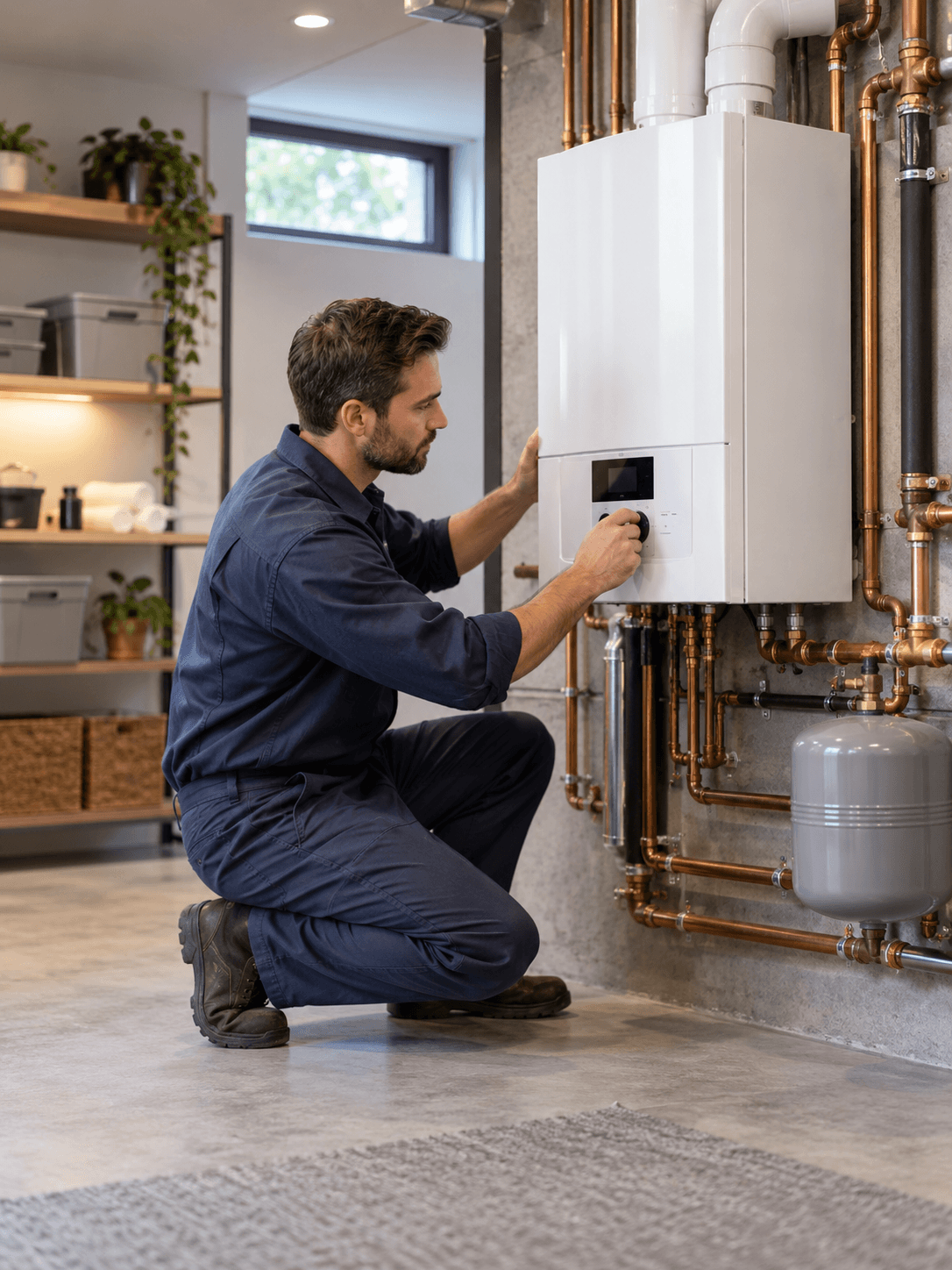
High-Efficiency Boilers
They pair perfectly with existing baseboard and radiant systems.
Hot water or warm air?
Boiler vs. Furnace - Which Heating System Is Right for Your Home?
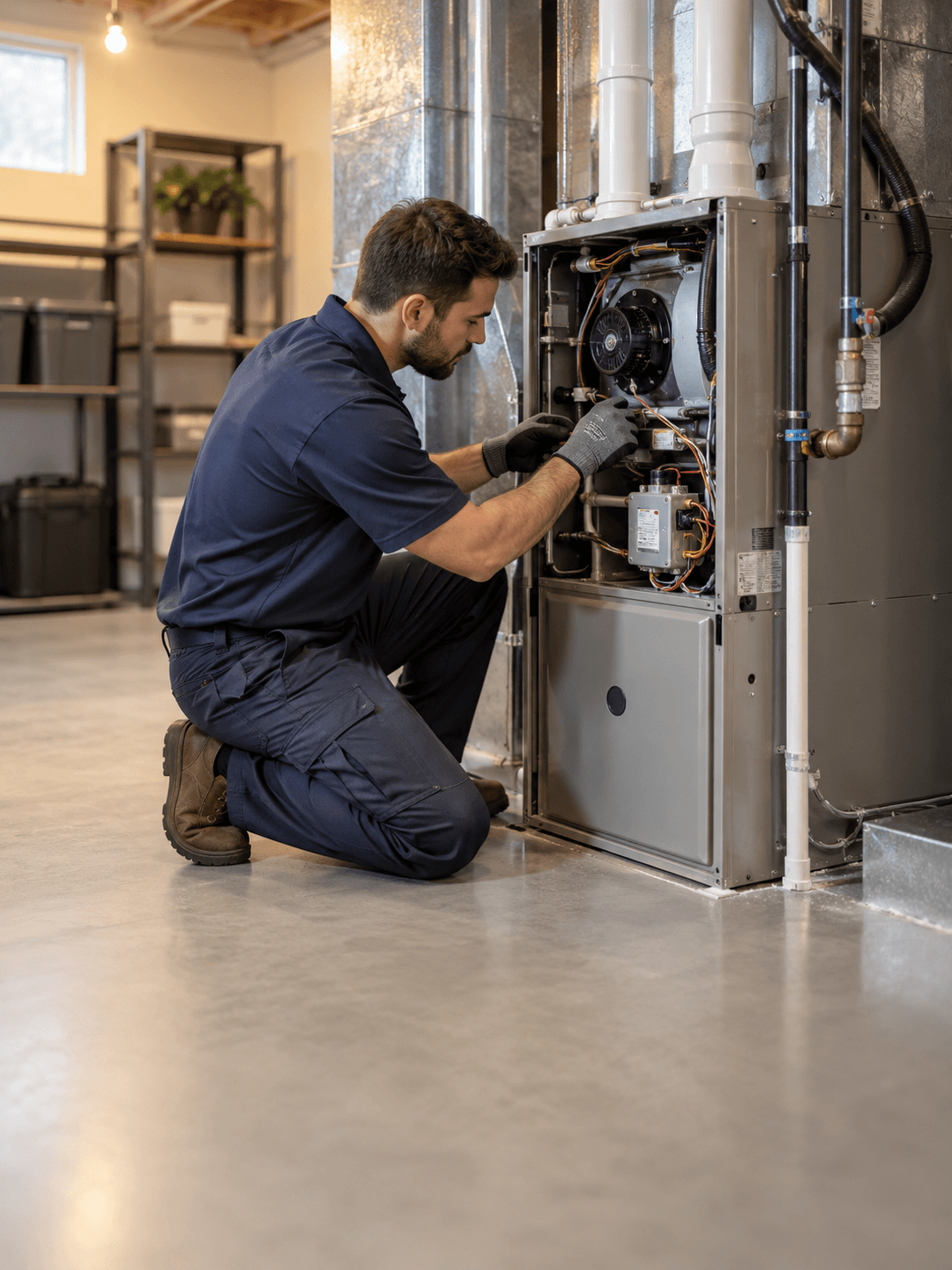
A boiler heats water and sends it through radiators, baseboard, or radiant floor loops. A furnace heats air and blows it through ductwork. If your home has baseboards, you have a boiler. If you have vents in the floor or ceiling, you have a furnace. Switching between the two is rarely worth it - the smarter move is a high-efficiency replacement of what you already have, or a heat pump conversion if you're ready to electrify.
Heats water
Boiler
Heats water and pumps it through a closed loop of pipes.
Gives off heat through radiators, baseboard or radiant floors.
Also called a hydronic system. Boiler homes usually have no heating ducts.
What you'll see: radiators or baseboard along the walls, or warm floors.
Heats via
Hot water through baseboards, radiators, radiant floor
Best for
Homes with existing hydronic systems
Comfort feel
Even radiant warmth, no drafts
Heats air
Furnace
Heats air, and a blower pushes it through ductwork.
Delivers heat through vents or registers in floors, walls or ceilings.
Often shares its ducts and blower with central air conditioning.
What you'll see: vents or registers, and a larger return grille that draws air back.
Heats via
Warm air through ductwork
Best for
Homes with existing ductwork
Comfort feel
Faster warm-up, some duct noise
Not sure? Photos of your equipment help, or we identify it during the visit. Schematic
What's inside
The main parts of each system.
A simple picture of what we look at during the assessment. It explains the parts; it doesn't diagnose them.
Boiler
12345
1BurnerIgnites the fuel — gas or oil — to make heat.
2Heat exchangerHot combustion gases pass through it and heat the water circulating inside.
3Circulator pumpMoves heated water through the pipes to radiators, baseboard or radiant floor loops.
4Expansion tankWater expands as it heats; the tank absorbs the extra pressure so the system stays within safe limits.
5Flue or ventCarries combustion gases outside. Condensing boilers typically use a sealed plastic vent pipe rather than a chimney.
Furnace
1234
1Burner and heat exchangerThe burner heats the heat exchanger; air passing over it warms without mixing with the combustion gases.
2BlowerMoves air across the heat exchanger and out through the ducts.
3FilterCatches dust in the air returning to the furnace, and needs changing regularly.
4Supply and return ductsSupply ducts carry warm air to the rooms; return ducts bring air back to be heated again.
Schematic
Repair, replace or rethink
Which situation sounds like yours?
There is no single right answer. Choose the closest situation to see which paths may be worth discussing.
01It still heats reliably
A repair or service visit may be all it needs.
If the system heats the home and problems are occasional, keeping it working may be the practical choice. Some homeowners also use the visit to plan what comes next.
Paths worth discussing
Repair or maintainWhen the system still heats reliably, a repair or service visit may keep it running safely.
Heat pump or hybridA heat pump alongside or instead of the existing system may make sense, depending on the home and how it distributes heat.
It may be time to compare repair with replacement.
When breakdowns repeat, it is worth weighing another repair against a replacement or a different heating path. The condition of the equipment and how the home is heated both matter.
Paths worth discussing
Repair or maintainWhen the system still heats reliably, a repair or service visit may keep it running safely.
Like-for-like replacementA new boiler or furnace, evaluated for sizing, venting, how heat is distributed and the condition of what is there now.
Heat pump or hybridA heat pump alongside or instead of the existing system may make sense, depending on the home and how it distributes heat.
Boiler homes can replace the boiler and keep the radiators or baseboard, or add ductless heat pumps and keep the boiler as backup. It depends on the rooms and the design.
Paths worth discussing
Like-for-like replacementA new boiler or furnace, evaluated for sizing, venting, how heat is distributed and the condition of what is there now.
Heat pump or hybridA heat pump alongside or instead of the existing system may make sense, depending on the home and how it distributes heat.
In a ducted home, replacing the furnace and air conditioner at the same time opens more options, including a ducted heat pump that heats and cools through the same ducts.
Paths worth discussing
Like-for-like replacementA new boiler or furnace, evaluated for sizing, venting, how heat is distributed and the condition of what is there now.
Heat pump or hybridA heat pump alongside or instead of the existing system may make sense, depending on the home and how it distributes heat.
If you want to rely less on fossil fuel, a heat pump — on its own or with the existing system as backup — may fit. The right setup depends on the home and how it distributes heat.
Paths worth discussing
Heat pump or hybridA heat pump alongside or instead of the existing system may make sense, depending on the home and how it distributes heat.
A no-cost visit to see your boiler or furnace, how heat reaches your rooms, the venting, fuel and electrical service.
02
Diagnose and size the next step
We explain what we found and the options that may fit — a repair, a replacement or another heating path — sized to your home.
03
Plan venting, ducts or piping
We plan the venting, ductwork or hydronic piping, any electrical work, and arrange permits where required.
04
Repair or install, then hand over
We complete the work, test the system and show you how the controls work.
Why Massachusetts Homeowners Choose EcoSave Home Solutions
Honest Heating Recommendations
If your existing boiler has 10 good years left, we'll say so. We've talked homeowners out of $18,000 replacements they didn't need.
Frequently Asked Questions About Boilers and Furnaces
Look at how heat reaches your rooms. Radiators, baseboard or warm floors mean hot water, so a boiler. Vents or registers in the floors, walls or ceilings mean warm air, so a furnace. If you are not sure, photos help, or we identify it during the visit.
Neither is universally better - the right answer depends on your home. Boilers give even radiant warmth through baseboards or radiators. Furnaces give faster warm-up through ductwork. Switching between them is rarely worth the retrofit cost.
It depends on how reliably the system heats, how often it needs repairs, its condition and the fuel it uses. We look at all of these and explain the options, including a repair where that makes sense.
Often, yes. Many boiler homes add ductless heat pumps for some or all rooms and keep the boiler as backup. Whether that fits depends on the rooms and the design, which we look at during the assessment.
Sometimes. If the ductwork is in good condition and sized for the load, a ducted heat pump may connect to it — on its own, or with the furnace kept as backup. We check duct size, condition and leakage first.
It depends on the equipment. In many homes the air conditioner's indoor coil sits on the furnace and shares its blower and ducts, so we check its age, condition and compatibility before recommending whether to keep or replace it. A ducted heat pump can also cool through the same ducts.
Standard Mass Save incentives for fossil-fuel boilers and furnaces are no longer generally available. Income-qualified exceptions may apply, and we can check whether one applies to your household. Current heat pump incentives are on our heat pump page.
We look at your boiler or furnace, how heat reaches your rooms — radiators, baseboard or ducts — the venting, fuel and electrical service, and any central air conditioning. Then we explain the options that may fit and what each would involve.
Old Boiler or Furnace? Don't Wait for a Breakdown.
Find the right heating solution for your home and understand your Mass Save options.